Oxycodone Addiction Treatment
You don’t have to white-knuckle this alone.
Whether oxycodone entered your life through a prescription or somewhere else entirely, what matters now is finding a path forward — and we’re here to help you find it.
Arista Recovery offers compassionate, medically supervised oxycodone detox and rehab, with locations in Kansas and Ohio and outpatient care in the Kansas City area.

.svg)


What Is Oxycodone?
Oxycodone is a prescription opioid pain medication used to treat moderate to severe pain. It works by binding to opioid receptors in the brain and nervous system, reducing the perception of pain while producing a sense of warmth, calm, and — at higher doses — euphoria.
It’s available under brand names including OxyContin, Percocet, and Roxicodone, and in various forms including tablets, capsules, and liquid.
Is Oxycodone Dangerous?
When used as prescribed for legitimate pain, oxycodone can be an effective medication. The challenge is that it’s also highly habit-forming.
The same mechanism that makes it effective at relieving pain also activates the brain’s reward system — and over time, the brain can begin to depend on that activation. That’s not a character flaw. It’s how opioids work.
The U.S. accounts for roughly 80% of the world’s oxycodone consumption. Between 21–29% of patients prescribed opioids for chronic pain misuse them at some point, and 8–12% develop an opioid use disorder.


Opioid Dependence vs. Opioid Addiction:
Understanding the Difference
These two words get used interchangeably, but they mean different things — and knowing the difference can actually help reduce the shame that keeps a lot of people from seeking help.
Physical Dependence
Dependence is what happens when your body gets used to having oxycodone around. Over time, your nervous system recalibrates around the drug’s presence. If the drug is suddenly removed, you go into withdrawal.
This can happen to anyone who takes opioids regularly for long enough — including people who never misuse their prescription. It doesn’t mean something is wrong with you. It means your body is doing what bodies do.
Opioid Use Disorder (Addiction)
Addiction involves a loss of control over use — continuing to take oxycodone despite real consequences to your health, relationships, or daily life. It’s driven by changes to the brain’s reward system that make stopping feel impossible, not just uncomfortable. People with opioid use disorder often want to stop and can’t — and that’s not a failure of willpower. It’s a medical condition, and it responds to treatment.
About 15% of people prescribed opioids go on to develop an opioid use disorder. If you’re reading this page, you may already know which side of that line you’re on. Either way, you’re in the right place.


Signs of Oxycodone Addiction
Oxycodone addiction can be hard to recognize — especially when it started with a legitimate prescription.
Here are some of the signs that use has moved beyond what was intended.
Behavioral Signs
- Reporting lost prescriptions or asking for early refills
- Visiting multiple doctors to obtain additional prescriptions
- Taking someone else’s oxycodone, or purchasing it outside of a pharmacy
- Letting work, family, or other responsibilities slip
- Being secretive or defensive about how much you’re taking
- Continuing to use even after the original pain has resolved
Physical Signs
- Drowsiness or sedation, especially at unexpected times
- Slurred speech
- Pinpoint (constricted) pupils
- Constipation, nausea, or appetite changes
- Slowed breathing
- Itching
- Sleep disruption
Emotional & Cognitive Signs
- Significant mood swings — euphoria when using, irritability or depression when not
- Anxiety, paranoia, or social withdrawal
- Difficulty concentrating or remembering things
- Feeling like you can’t get through the day without oxycodone
If any of this sounds familiar, please know you’re not alone — and you’re not past help. Our admissions team talks with people in exactly this situation every single day, and they’re ready to listen without judgment.
Oxycodone Withdrawal:
What to Expect
Opioid withdrawal is rarely dangerous in the way that alcohol or benzodiazepine withdrawal can be, but it is genuinely miserable — and it’s one of the most common reasons people return to using.
Understanding what’s coming, and having medical support through it, makes all the difference.
Common Withdrawal Symptoms
Opioid-Induced Hyperalgesia (OIH)
Some people going through oxycodone withdrawal experience opioid-induced hyperalgesia — a heightened sensitivity to pain that develops as a result of long-term opioid use.
In other words, the medication that was managing pain can, over time, actually amplify it. This is most common during the tapering process and is something our medical team actively monitors and manages.
The Timeline
Medically supervised detox doesn’t eliminate withdrawal, but it does make it safer and more manageable — and it significantly reduces the risk of relapse during those first critical days.
Learn more about Medical Detox


Oxycodone and Other Substances
Oxycodone is most dangerous when combined with other central nervous system depressants — alcohol, benzodiazepines like Xanax or Klonopin, or other opioids. Each of these substances slows breathing on its own. Together, the risk of respiratory failure rises dramatically.
The combination of opioids and benzodiazepines is serious enough that the FDA requires a black box warning on both drug classes.
A 2014 study found that patients prescribed both opioid painkillers and benzodiazepines increased by 41% between 2002 and 2014 — a period that saw a corresponding spike in overdose deaths.
If you’ve been using oxycodone alongside alcohol, benzos, or any other substance, please tell our admissions team. This information directly shapes the safest detox approach for you, and being upfront about it could save your life.
A Note on Fentanyl and the Illicit Supply
One of the real dangers of purchasing oxycodone outside of a pharmacy today is the prevalence of counterfeit pills laced with fentanyl. Illicitly manufactured fentanyl is far more potent than oxycodone, and it’s now found in a significant portion of the counterfeit pill supply.
Many overdoses attributed to ‘oxycodone’ involve fentanyl the buyer didn’t know was there. If this is part of your situation, our team is here to help — not to judge.
How Arista Recovery Treats Oxycodone Addiction
Oxycodone addiction treatment works best when detox, medication, therapy, and real human connection are combined. Here’s what that looks like at Arista Recovery.
.svg)
MAT is one of the most effective tools available for opioid use disorder — and one of the most misunderstood. The three FDA-approved medications for opioid use disorder are:
- Buprenorphine (Suboxone) — reduces cravings and withdrawal symptoms without producing the high of a full opioid agonist. Often used as a bridge through detox and as a longer-term maintenance medication.
- Methadone — a full opioid agonist taken in controlled doses under clinical supervision. Effective for severe opioid use disorder, particularly those who haven’t responded to other approaches.
- Naltrexone (Vivitrol) — a non-opioid medication that blocks opioid receptors entirely. Because it doesn’t work until opioids are fully cleared, it’s used after detox. Excellent option for people who want a complete block against relapse.
Our clinical team works with each client to determine which — if any — of these medications is appropriate. MAT is not a replacement for recovery. It’s a tool that makes recovery more sustainable.
.svg)
- Cognitive Behavioral Therapy (CBT) — understanding the triggers, thought patterns, and coping habits that sustained opioid use
- Dialectical Behavior Therapy (DBT) — emotional regulation and distress tolerance for the hard moments in early recovery
- Motivational Interviewing (MI) — helping you find and strengthen your own reasons for change
- Trauma-Focused Therapy — because trauma and opioid use disorder are deeply connected for many people
.svg)
Recovery isn’t just about stopping a substance. It’s about building something worth staying sober for.
That’s where our experiential programming comes in:
- Equine-assisted therapy
- Horticulture therapy and the Synergistic Recovery Program
- Art therapy with a certified art therapist on staff
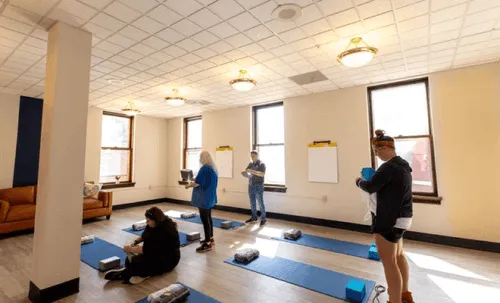
- Yoga, meditation, and movement
- Nutritional counseling and chef-prepared meals
Levels of Care for Oxycodone Addiction
We’ll meet you right where you’re at and together, we can create a healthier, sustainable way forward.
Medical Detox
For most people with oxycodone dependence, medically supervised detox is the safest way to start. Our team monitors symptoms, manages discomfort with appropriate medications, and watches for complications. Available at our Paola, KS and Hilliard, OH inpatient campuses.
Residential Inpatient Rehab
After detox, residential treatment is where the real work of recovery happens — individual therapy, group sessions, experiential programming, family involvement, and building a plan for life after treatment. Available at Paola, KS and Hilliard, OH.
Partial Hospitalization Program (PHP)
Intensive clinical programming during the day with the flexibility to return home or to sober living in the evenings. A strong option for those stepping down from residential or needing more structure than traditional outpatient offers.
Intensive Outpatient Program (IOP)
Structured therapy 3–5 days per week at our Overland Park, KS center. Designed for people who are stable enough to live at home but still need consistent clinical support as they build their recovery.
Medication-Assisted Treatment (MAT)
Available across levels of care. Our addictionologist can prescribe and monitor buprenorphine, methadone coordination, or naltrexone as part of a comprehensive treatment plan.
Aftercare & Alumni
Discharge isn’t the finish line — it’s the starting line. Arista’s aftercare planning and alumni program keep you connected to support, community, and accountability long after the formal program ends.
.webp)

Our Locations
We have inpatient campuses in Kansas and Ohio and an outpatient center in the Kansas City area, so there’s likely a location that works for you — or for your loved one.


Paola, KS
Paola, Kansas 66071
Hilliard, OH
Overland Park, KS
Overland Park, Kansas 66207
Insurance & Admissions
Most commercial insurance plans cover oxycodone detox and addiction treatment.
Arista Recovery is in-network with major carriers, and our admissions team verifies your benefits before treatment begins — at no cost to you.
.png)
.avif)

.webp)








FAQs
Frequently Asked Questions About Oxycodone Addiction Treatment
Physical dependence means your body has adapted to oxycodone and will go into withdrawal if you stop — this can happen to anyone who takes opioids long enough. Opioid use disorder (OUD) involves the compulsive patterns of use that persist despite real consequences — the loss of control that feels impossible to break.
Both deserve treatment, and both are treatable. Our admissions team can help you understand where you or your loved one falls on this spectrum.
Opioid withdrawal is rarely life-threatening the way alcohol or benzodiazepine withdrawal can be, but it is intense — and without support, it’s the most common reason people return to using.
Medically supervised detox keeps you safe and significantly more comfortable through the worst of it. It also puts you in the right environment to transition directly into treatment, rather than returning home and relapsing before you have a chance to start.
The FDA has approved three medications for opioid use disorder: buprenorphine (often combined with naloxone as Suboxone), methadone, and naltrexone (Vivitrol).
Each works differently and suits different people. Buprenorphine and methadone reduce cravings and withdrawal; naltrexone blocks opioid receptors entirely and is used after full detox.
Our clinical team works together to determine which approach — if any — makes sense based on your clinical history and goals.
Acute withdrawal from oxycodone typically peaks around 36–72 hours after the last dose and begins to improve by day 5–7. Some people experience post-acute withdrawal syndrome (PAWS) for weeks or months afterward — lingering anxiety, sleep problems, mood swings, and cravings.
PAWS doesn’t mean recovery isn’t working. It’s a known phase of opioid recovery that our residential and outpatient programs are designed to support you through.
Opioid-induced hyperalgesia (OIH) is a paradoxical condition where long-term opioid use actually increases sensitivity to pain rather than reducing it. People with OIH may find that their pain gets worse during a taper — not because the underlying condition has worsened, but because the nervous system has recalibrated around opioid use. Our medical team is trained to identify and manage OIH as part of the detox process.
It’s more common than most people expect — and it usually happens gradually. As tolerance builds and prescriptions become harder to obtain, some people begin seeking cheaper or more accessible opioids. Heroin and illicit fentanyl fill that gap in the market.
This isn’t a moral failing — it’s how opioid use disorder progresses for a significant minority of people. Roughly 4–6% of people who misuse prescription opioids eventually transition to heroin. (Source: NIDA) If this is where you are, we want you to know that we see it, we understand it, and we can help.
Yes. Opioid addiction treatment is covered by most commercial insurance plans under the Mental Health Parity and Addiction Equity Act (MHPAEA). Arista Recovery is in-network with Aetna, BCBS, Cigna, Humana, United Healthcare, and other major carriers.
Our team handles the insurance verification before treatment begins, so you’re not figuring that out alone.
Detox is the beginning, not the end. Once you’re medically stable, the work of understanding what drove the opioid use — and developing the tools to live without it — is what happens in residential and outpatient treatment.
The research is clear: the longer someone stays engaged in treatment, the better their long-term outcomes. Our team builds a continuing care plan before discharge so the path forward is clear.
Inpatient treatment requires stepping away from work, and most eligible employees can use FMLA (Family and Medical Leave Act) to protect their job during that time. Our admissions team can provide documentation to support an FMLA request.
For those who cannot take extended leave, our IOP program in Overland Park, KS offers scheduling flexibility that allows some clients to maintain employment while still getting meaningful clinical support.
This is one of the hardest things to do — and one of the most important. The admissions team at Arista Recovery speaks with family members every day who are trying to figure out exactly what you’re figuring out right now.
We can help you understand what your loved one may be experiencing, how to approach the conversation, and what options exist if they’re ready to get help. You don’t have to have all the answers before you call.
Ready to Take the Next Step?
Recovery from oxycodone addiction is most effective when medical detox, medication-assisted treatment, and behavioral therapy are combined. Our admissions team is available around the clock to verify your insurance, talk through your situation, and help you figure out what the right next step looks like.
There’s no pressure and no judgment. Just a real conversation with someone who knows this territory.
What We Do
Treatment Programs at Arista








.webp)


Our Unique Therapies
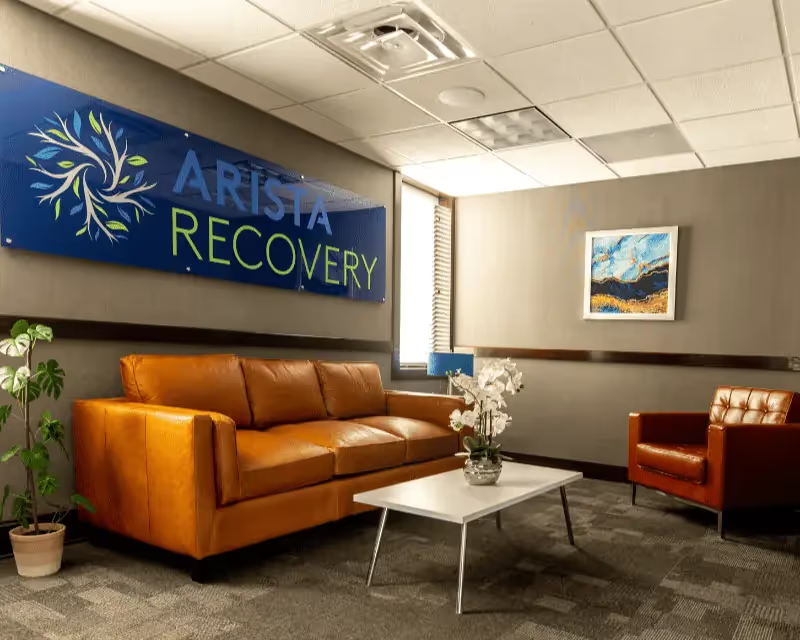
Explore our innovative approach to addiction treatment at Arista Recovery. From evidence-based therapies to holistic and experiential methods, we offer an immersive experience that works to treat the root causes of substance abuse our full continuum treatment programs




Educational Therapy
Explore Educational Therapy at Arista Recovery and how it can help you recover.
Cognitive Behavioral Therapy (CBT)
Explore cognitive behavioral therapy at Arista Recovery and how it can help you recover.
Dialectical Behavioral Therapy (DBT)
Explore dialectical behavioral therapy for addiction treatment and how it can help you recover.
Horticultural Therapy
Explore horticultural therapy at Arista Recovery and how it can help you recover.
Sand Tray Therapy
Explore sand tray therapy at Arista Recovery and how it can help you recover.
Experiential Therapy
Explore experiential therapy at Arista Recovery and how it can help you recover.
Synergistic Therapy
Our Synergistic Recovery Program programs in both Kansas and Ohio provides effective training, both in the physical and mental domains